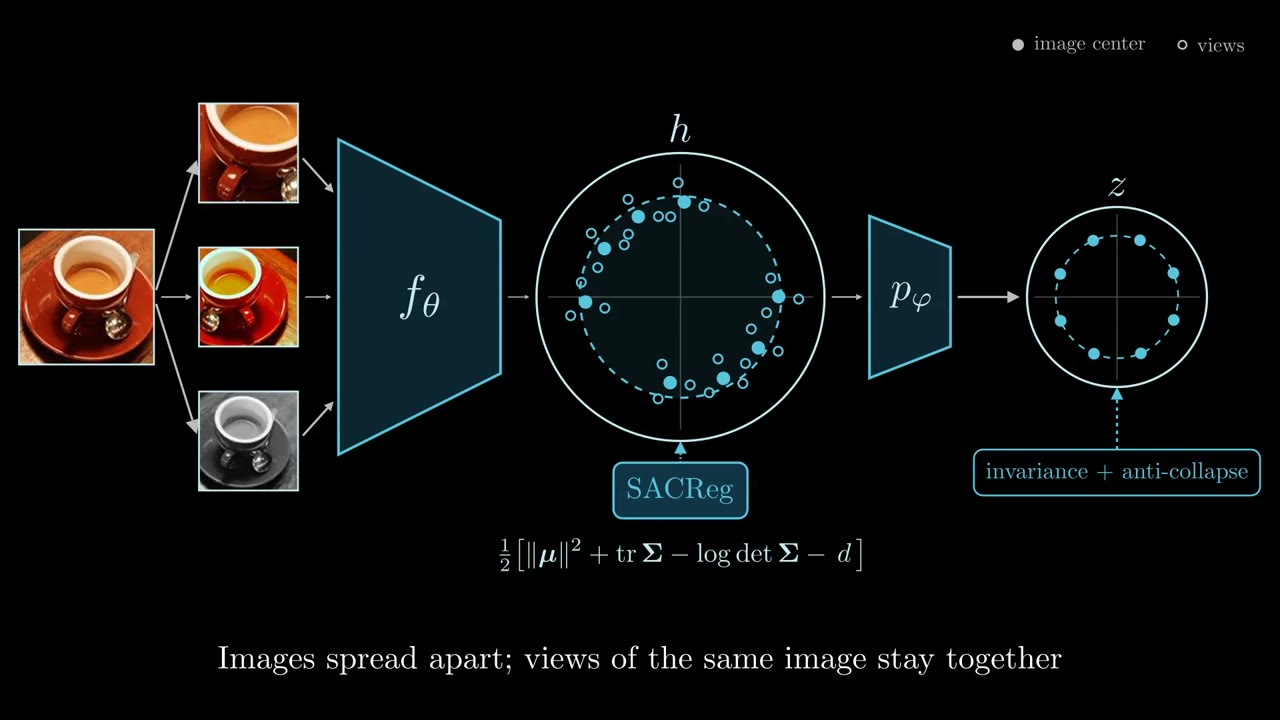
 teaser
λ-JEPA: Spectral Anti-Collapse Regularization for Self-Supervised Learning
Anti-collapse objectives keep the projector high-rank but can leave the backbone collapsed. SACReg regularizes the backbone directly.
Read the post →I study the geometry and structure of neural representations: how they are organized, when they collapse, and how they behave under distribution shift. My research focuses on three closely related areas. Representation learning looks at what information representations contain, how easily it can be read out and how to learn useful ones. Generalization is about how well models perform outside their training distribution and how to detect when they fail. Generative modeling focuses on learning data distributions, generating new samples and evaluating their quality.
These areas are closely connected, as the quality and structure of learned representations affect how well models generalize, how we learn data distributions and how we evaluate generative models.
A representation turns data into features that other models can use. The challenge is that we often don't know ahead of time what those models will need to do. Ideally, a good representation should be useful across many different tasks, while also making the relevant information easy to extract, even with something as simple as a linear probe.
Open questions
Our work
teaser
Anti-collapse objectives keep the projector high-rank but can leave the backbone collapsed. SACReg regularizes the backbone directly.
Read the post →Generalization is about how well a model performs on data outside its training distribution. Since training data can never cover every possible situation, generalization depends on what changes between training and testing, what stays the same, and which changes can be identified from the inputs. When a model fails to generalize, we also want to be able to detect that, including across different learning paradigms.
Open questions
Our work
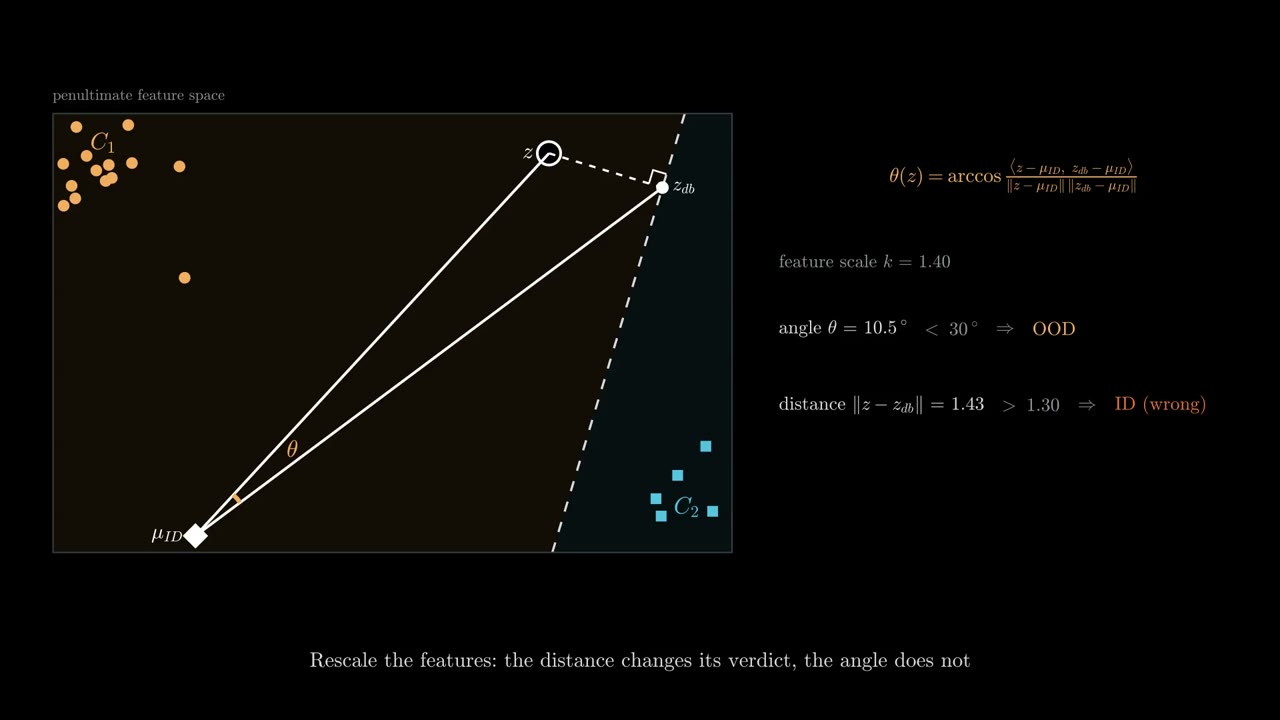 teaser
A post-hoc, hyperparameter-free OOD score: the angle between a feature and its projection onto the decision boundaries, seen from the ID mean.
Read the post →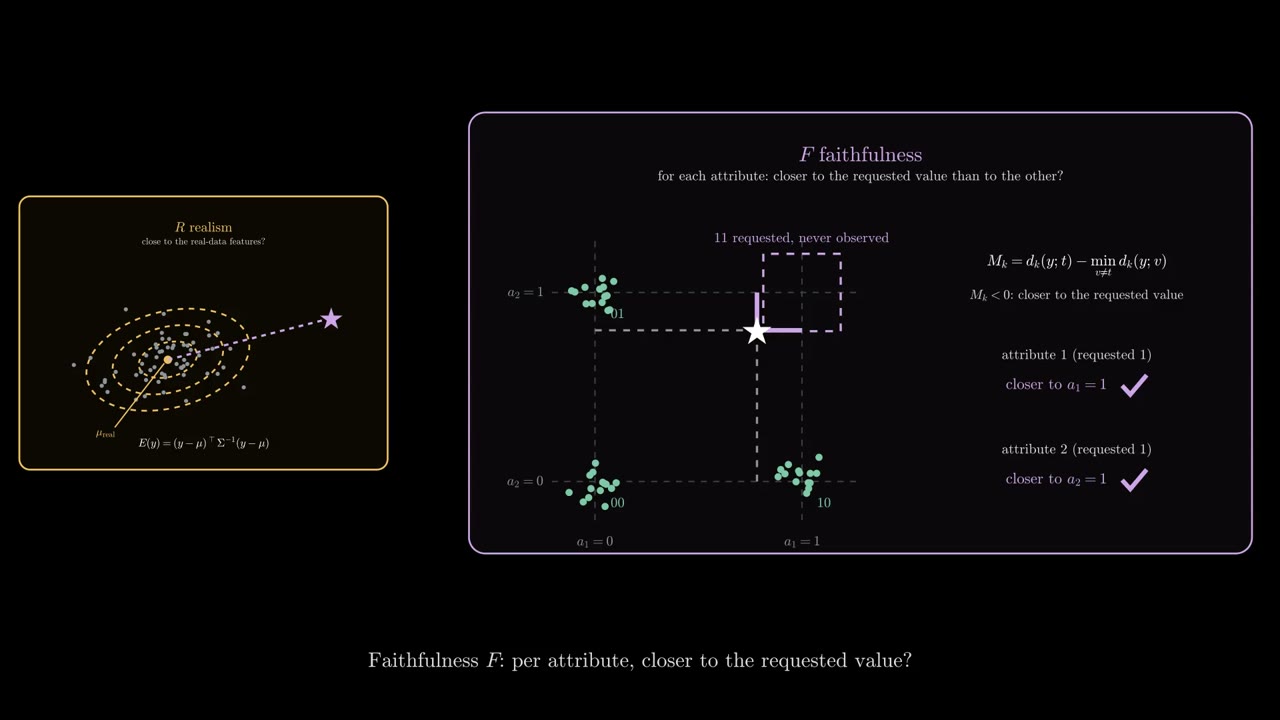 teaser
When the requested condition was never observed, there is no target distribution to compare against. A per-sample trust score needs only the training data.
Read the post →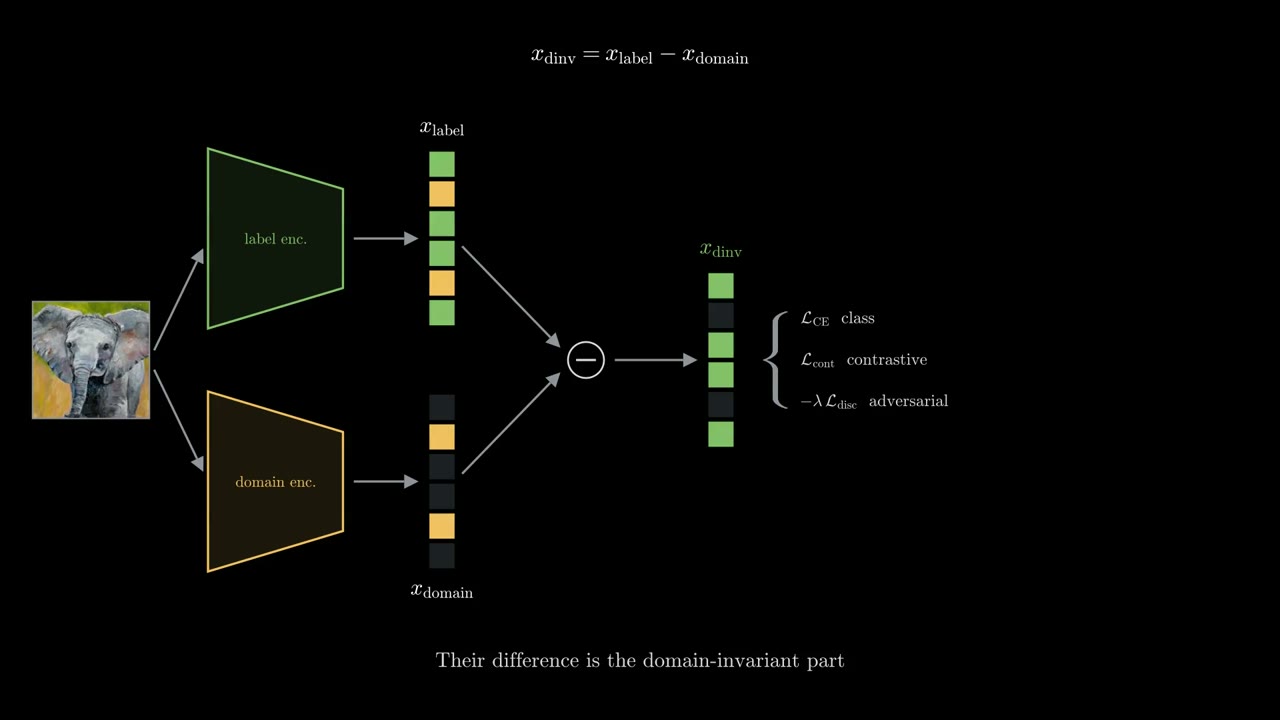 teaser
Domain generalization that keeps domain-specific features instead of discarding them, plus a latent-space remix augmentation.
Read the post →Generative modeling is about learning a data distribution so that we can generate new samples from it. Since a model only sees a limited amount of training data, the challenge is to learn the underlying distribution rather than simply reproduce what it has seen. Evaluating the results is not straightforward either. With high-dimensional data, there are many ways a model can get the distribution wrong and limited real data makes these problems hard to detect. A good score on one metric may therefore hide important problems. This is why we need to assess the quality of generated samples in different ways.
Open questions
Our work
 teaser
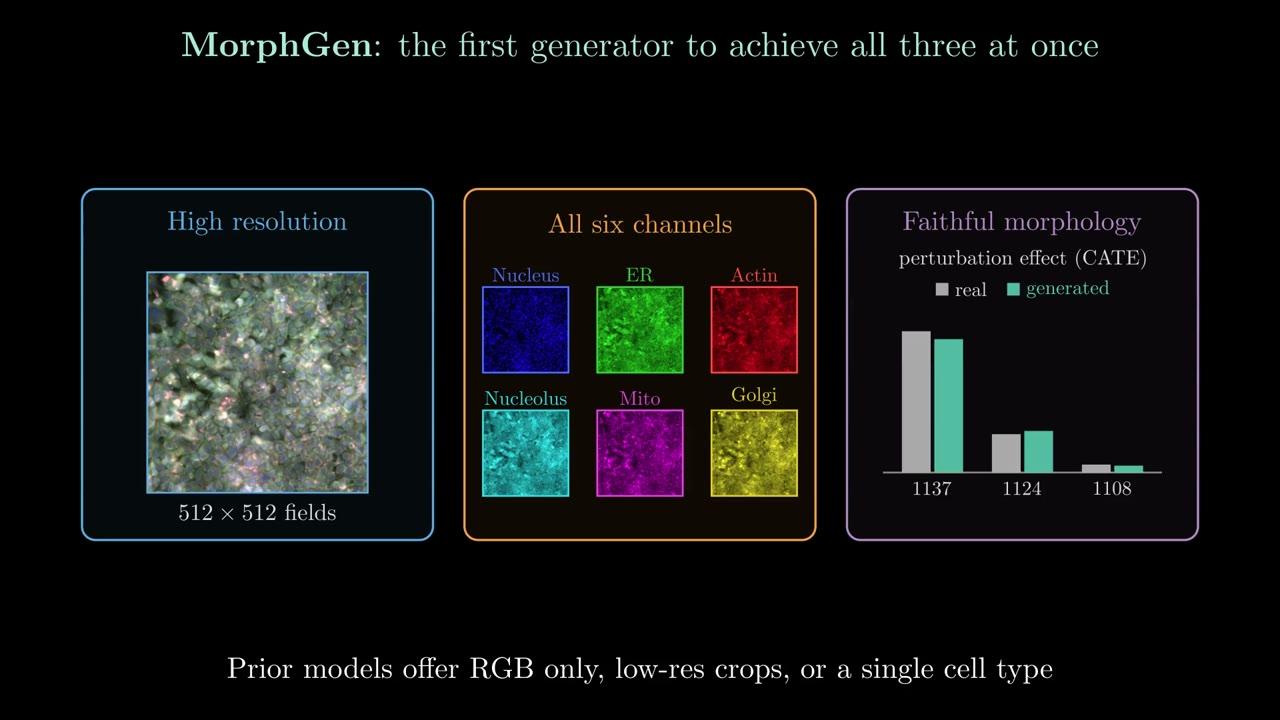
A latent diffusion transformer that generates all six Cell Painting channels at full resolution, across cell types and perturbations.
Read the post →
teaser
Filter, rank, or abstain on generated samples using realism and attribute-wise faithfulness, estimated from the training distribution alone.
Read the post →